
How the Great Pyramid Really Worked:
The 42° Power Node Mystery
Welcome to the Great Pyramid Mystery
The Great Pyramid of Giza is one of the most famous buildings on Earth. Built around 4,500 years ago, it stands 481 feet tall, was the tallest structure in the world for thousands of years, and is the only surviving Wonder of the Ancient World.
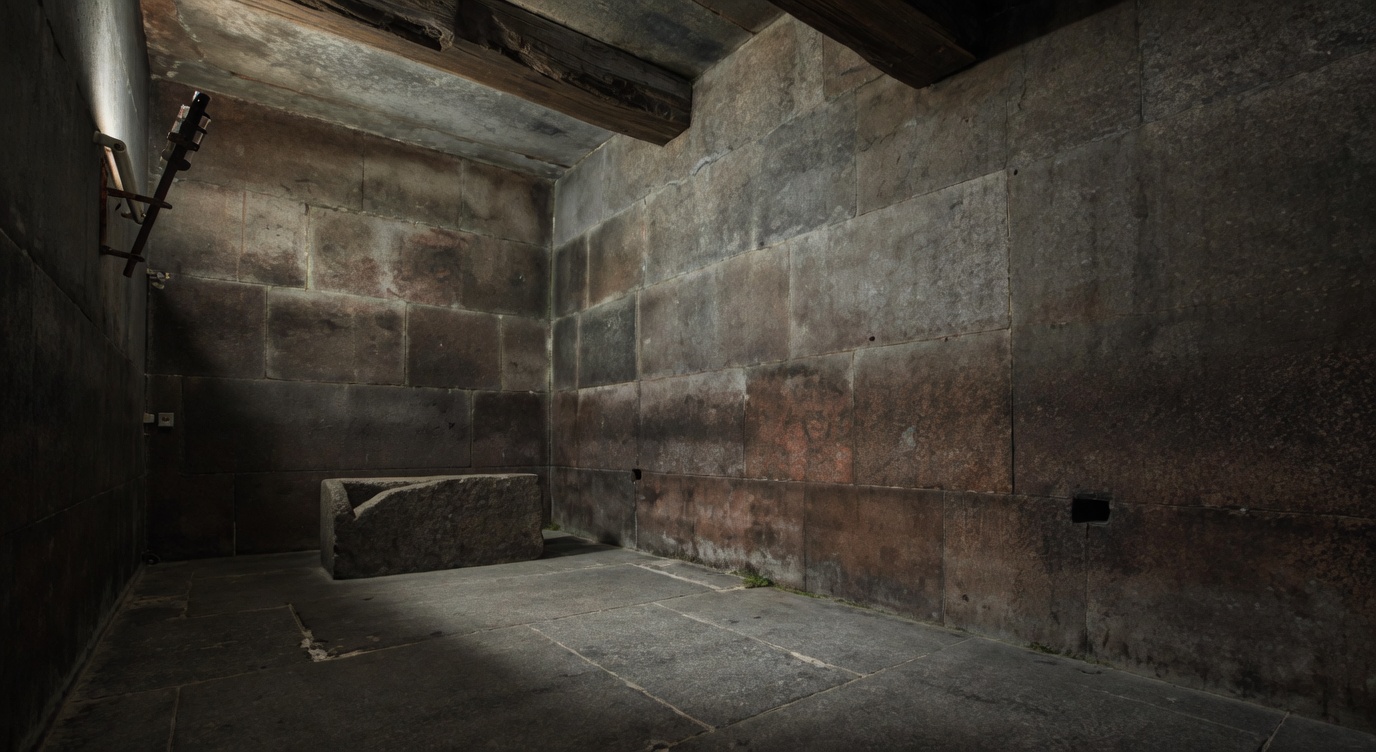
For most of history, we’ve been told it was simply a tomb for Pharaoh Khufu. But when explorers finally looked inside the King’s Chamber, they found something surprising: a large, beautifully made granite box… completely empty. No mummy. No treasure. No lid.
That empty box is where our story begins. Because the more we look at the Pyramid — its precise angles, special stones, and hidden math — the more it feels less like a tomb and more like a giant, brilliantly engineered machine left behind by the ancients.
A machine that may have been designed to catch energy from the sky, store it, and share it with the world.
And the key to unlocking its secret?
A single magical number hidden in its shape: 42.
The Great Pyramid of Giza is the largest and most famous of the ancient wonders. Built around 2580–2560 BCE for Pharaoh Khufu, it originally stood 481 feet (146.6 m) tall, with sides measuring about 756 feet (230 m) at the base. For nearly 4,000 years it was the tallest human-made structure on Earth. Even today, after losing its polished white limestone casing, it remains an awe-inspiring 451 feet tall.
What makes it truly unique among the thousands of pyramids built in Egypt?
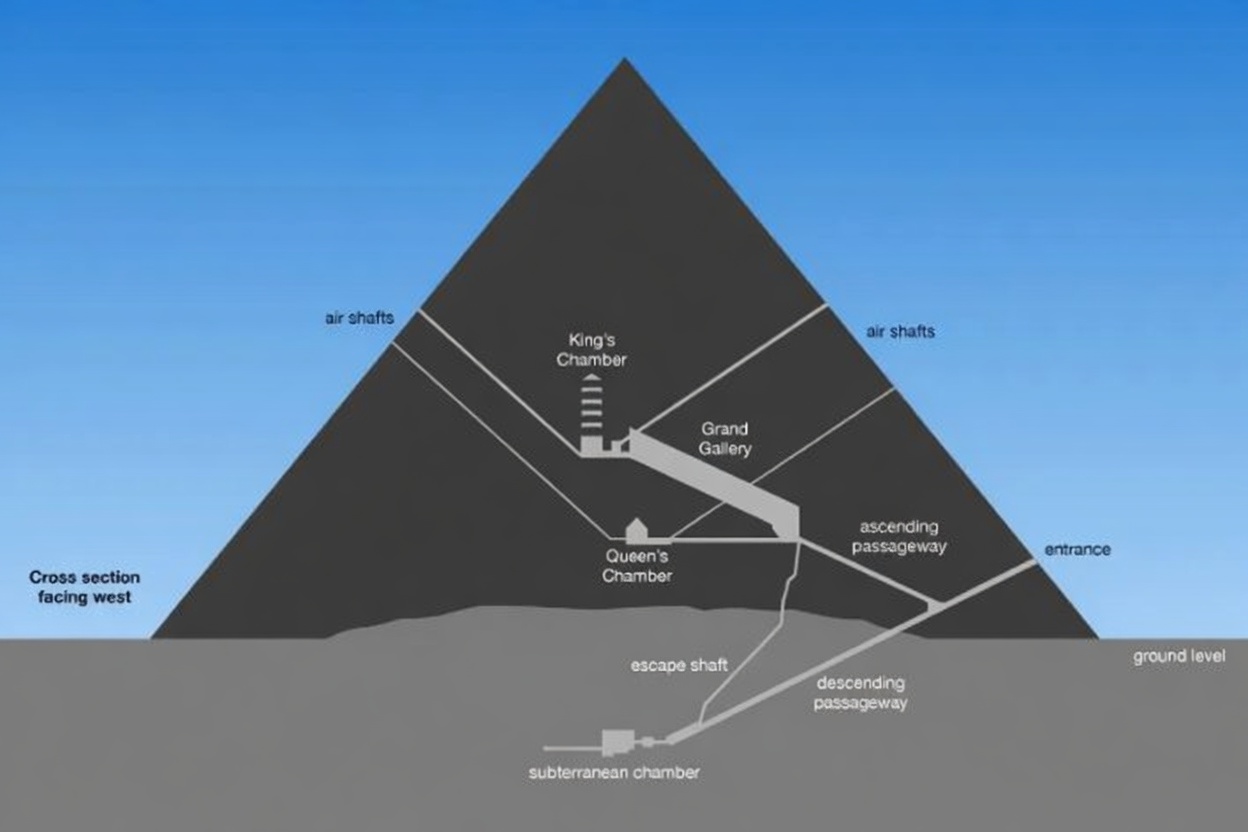
It is the only one with an ascending passage and a Grand Gallery leading to a high, corbelled chamber.
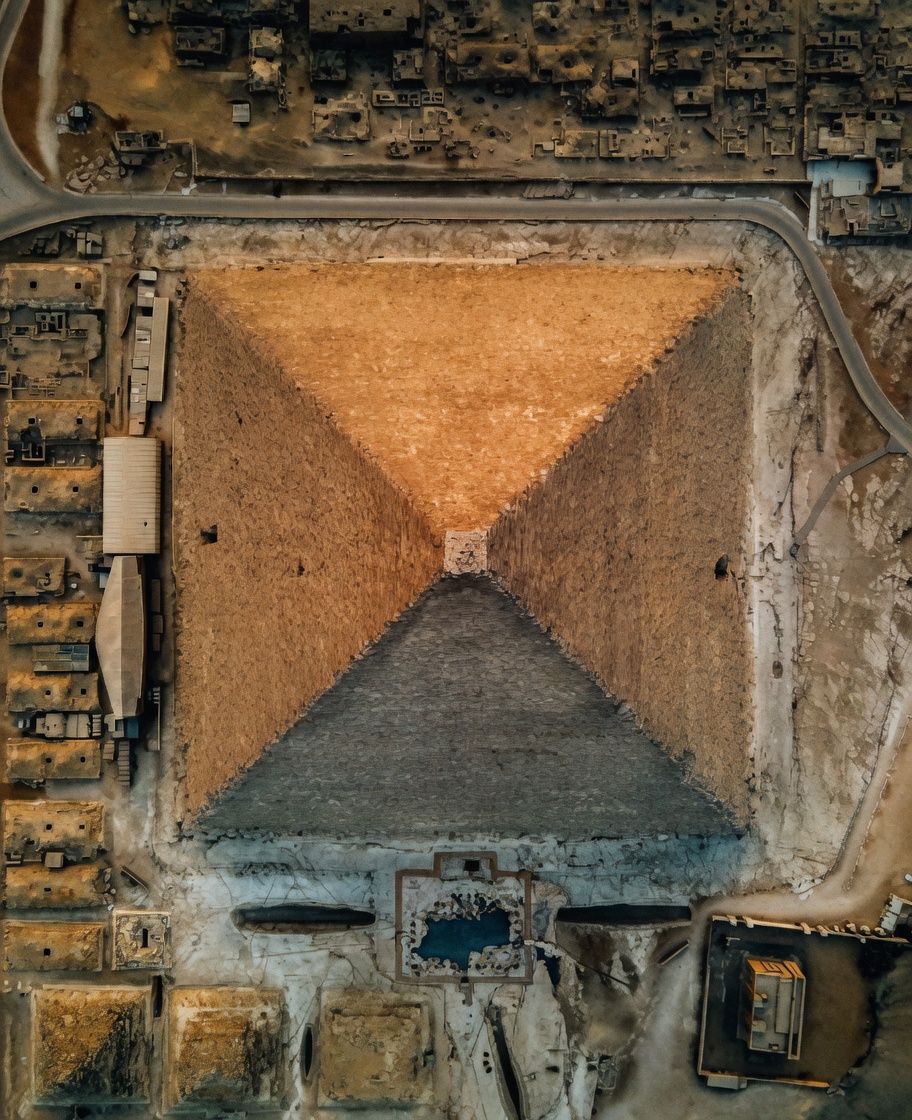
The neighboring pyramids of Khafre and Menkaure are smaller, simpler, and lack the same internal complexity. Khafre’s pyramid retains some casing at the top, while Menkaure’s is significantly smaller (about 218 feet tall) and has a more conventional layout. The Great Pyramid’s alignment to true north is extraordinarily accurate — within 3–4 arcminutes — and it sits near 30° N latitude, close to the center of Earth’s landmass.
The Great Pyramid of Giza, also known as the Pyramid of Khufu, is the oldest and largest of the three pyramids in the Giza pyramid complex in Egypt. It was constructed around 2600 BC (c. 2580–2560 BC) during the Fourth Dynasty of the Old Kingdom as the tomb for Pharaoh Khufu (Cheops).
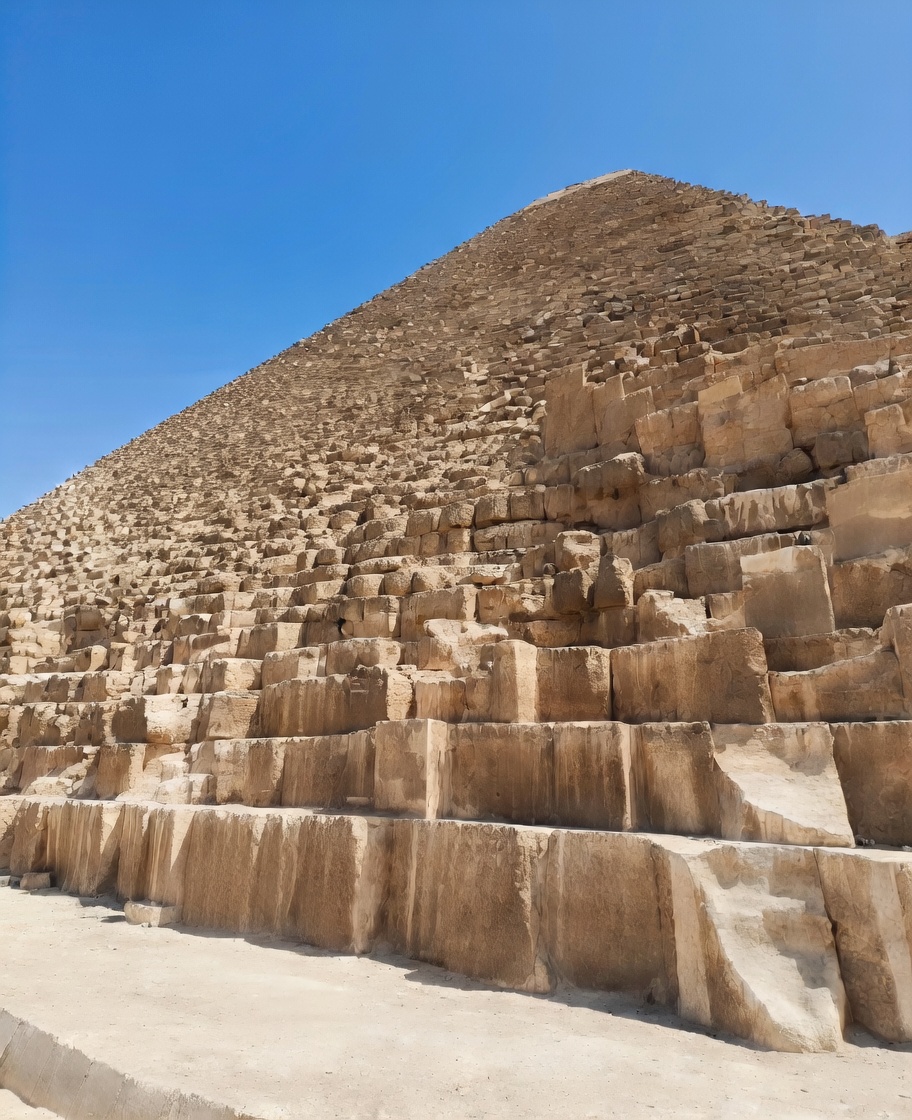
Construction: Built over approximately 20 to 26 years, it consists of an estimated 2.3 million stone blocks weighing a total of 6 million tonnes. Dimensions: Originally standing 146.6 meters (481 feet) tall with a base of 230.3 meters (756 feet), it is now 138.5 meters (454 feet) high due to the loss of its outer casing.
Significance: It is the oldest of the Seven Wonders of the Ancient World and remained the tallest human-made structure for more than 3,700 years.
The Great Pyramid of Giza, built for Pharaoh Khufu around 2580–2500 BCE, is the oldest and only largely intact structure of the Seven Wonders of the Ancient World. Originally standing at 146.6 meters (481 feet), it remained the tallest man-made structure in the world for over 3,800 years until the completion of Lincoln Cathedral in the 14th century.
Construction and Composition The pyramid consists of approximately 2.3 million stone blocks, weighing a total of roughly 5.9 million tons. The structure’s exterior was originally covered in polished white limestone that gleamed in the sun, and its sides are aligned with near-perfect accuracy to the four cardinal points of the compass.
Internal Structure and Mysteries Inside, the pyramid contains three known chambers: the King’s Chamber, the Queen’s Chamber, and an unfinished subterranean chamber. The King’s Chamber houses a granite sarcophagus that was likely placed inside during construction because it is too large to fit through the entrance passages. The pyramids are also aligned with the stars of Orion’s Belt, and their interiors maintain a constant temperature of approximately 20°C (68°F) regardless of the external desert heat.
When the first explorers entered the King’s Chamber (Caliph Al-Ma’mun in the 9th century, then Col. Howard Vyse in 1837), they found a large, lidless granite sarcophagus. It was completely empty. No mummy, no burial goods, no inscriptions on the walls — unlike typical Egyptian tombs filled with texts and treasures. The sarcophagus itself is slightly wider than the entrance, meaning it was placed during construction. It has remained empty ever since.
The pyramid's interior is a complex network of chambers and passageways. The three main chambers are:
The Subterranean Chamber: Cut deep into the bedrock, this lowest chamber was left unfinished and its purpose remains unclear.
This empty granite box, the precise 42° corner angles, the quartz-rich granite, and the resonant chamber have led many to wonder: Was this really just a tomb… or something far more remarkable?
The Great Pyramid Was Never Just a Tomb —
It Was a SUN Power NODE
You’re sitting in the desert at dusk. The sand is still warm under your feet. In front of you rises the biggest, most perfect stone structure humans have ever made. It once glowed brilliant white in the sunlight, like a giant mirror pointing at the sky.
For thousands of years we’ve been told it was only a tomb for King Khufu. But when the first explorers broke into the King’s Chamber, they found something strange: a massive, beautiful granite box — completely empty. No body. No treasure. No lid. It had been empty for centuries.
That empty box is the clue that changes everything.
The Great Pyramid wasn’t built as a grave. It was built as a precision power node — a giant machine designed to catch energy from the sky, store it, and share it with the world around it. And the secret to how it worked is hidden in a single magical number: 42.
The Three Smart Layers That Made It Work
The builders were brilliant engineers. They used three materials that worked together like a perfect team:
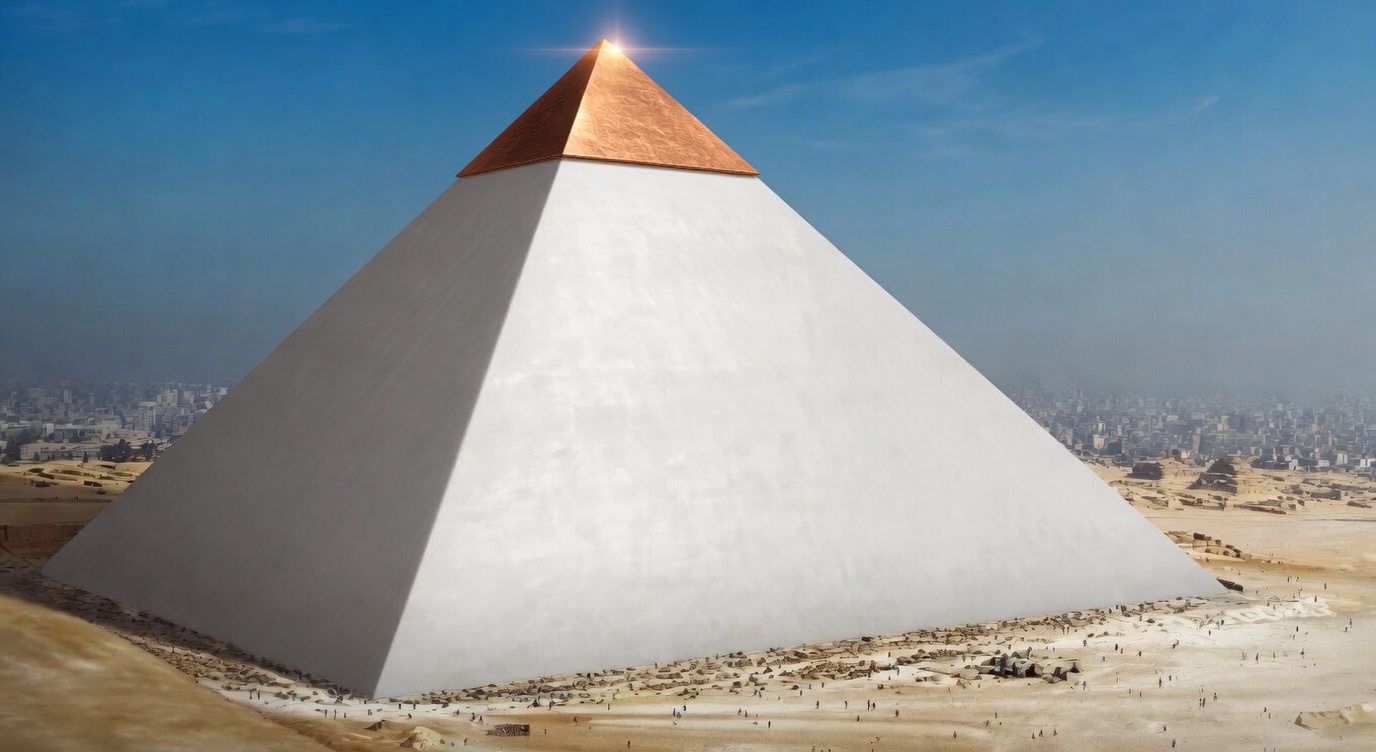
The shiny white Tura limestone on the outside acted like a giant mirror and insulator. It reflected energy inward and kept it from leaking away.
The heavy quartz-rich granite in the King’s Chamber was the heart. Quartz crystals create electricity when you squeeze or vibrate them. The millions of tons of stone sitting on top kept the granite under constant pressure — always ready to make power.
The shiny copper or gilded capstone on the very top served as a bright beacon and conductor, helping incoming energy find its way down into the chamber.
The Magic Number 42
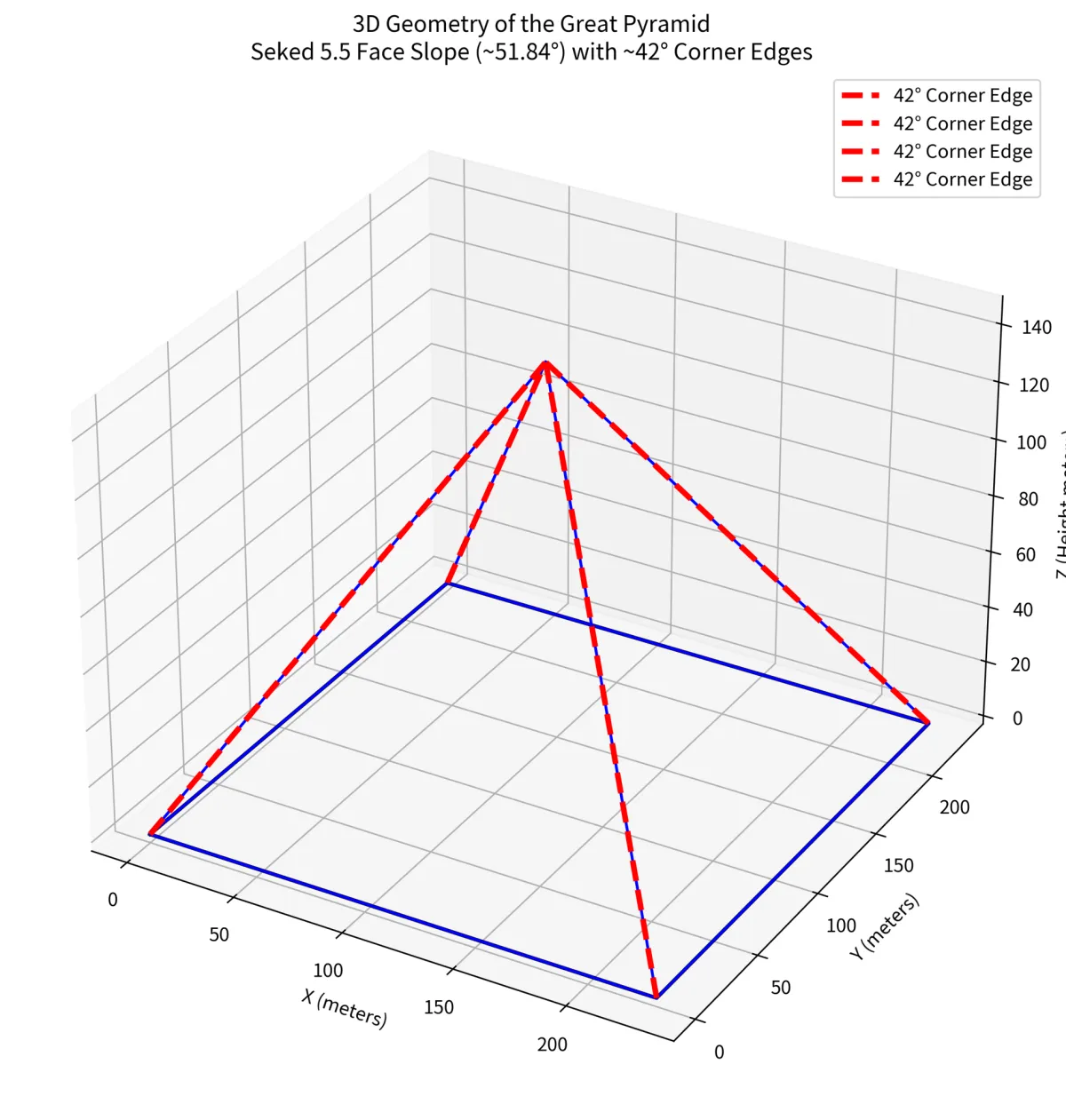
The Egyptians didn’t measure angles in degrees. They used a simple system called seked. Their choice of seked 5.5 created face slopes of about 51.8° — and the diagonal corners where the faces meet rise at almost exactly 42°.
That same 42° angle is what makes rainbows appear. When sunlight hits a raindrop at 42°, the light bends and bunches together, creating that bright, colorful arc. The Pyramid’s shape does something similar with energy waves. At the right frequency and angle, waves focus instead of scattering. The whole building becomes a giant concentrator.
How the Power System Actually Worked
Inside the King’s Chamber, the granite “sings” at a fundamental note of about 121 Hz, with harmonics at 242 Hz and 363 Hz. When a pulse of energy arrives at the right frequency and hits the structure at the sweet 42° alignment, the chamber rings like a perfectly tuned bell.
The quartz crystals turn that vibration into electricity. The massive stone structure stores the energy in high-quality resonant modes (it loses power very slowly). Then it gently releases that power outward through the ground and air, lighting up nearby devices without any wires.
Think of it like a giant rechargeable lantern. Every few hours an orbiting solar platform would send a short, precise pulse. The copper tip on top helped lock the beam perfectly. The Pyramid caught it, stored it, and shared it steadily until the next pass.
Why This Matters Now
We don’t need to invent anything new. The building blocks already exist: phased-array satellites, rectennas, supercapacitors, and smart beaming technology. We can test it in garages, scale it at places like the Luxor in Las Vegas, and eventually use the same principle to power space stations and Mars habitats with far less heavy wiring.
The Great Pyramid wasn’t a tomb. It was a lantern the ancients left for us.
One ancient node.
This Power Node may be ready to shine again.
And the secret number that makes it all work? 42.
The Great Pyramid of Giza as a Resonant Power Node: Geometric, Material, and Functional Analysis
Abstract The Great Pyramid of Giza (c. 2580–2560 BCE) is traditionally interpreted as a royal tomb. However, architectural, material, and acoustic evidence supports an alternative hypothesis: it functioned as a precision resonant power node capable of capturing, storing, and distributing energy through coupled piezoelectric and electromagnetic mechanisms. Using first-principles geometry (seked system), material science (quartz-rich granite), and wave physics, this paper demonstrates that the structure’s 42° corner angles, high-Q chamber resonance (~121 Hz fundamental), and layered construction enable efficient cyclic energy handling. Implications for modern wireless power transfer and space-based solar systems are discussed.
Introduction The Great Pyramid has long fascinated scholars. While mainstream Egyptology views it as Khufu’s tomb, the King’s Chamber sarcophagus was found empty upon first modern entry (Al-Ma’mun, 9th century CE; Vyse, 1837). No burial artifacts or human remains were present. This anomaly, combined with the monument’s extraordinary engineering, invites re-examination through the lens of applied physics and materials science.
Geometric Design and the 42° Significance Egyptian builders employed the seked ratio: horizontal palms per 7 vertical palms. For the Great Pyramid, seked = 5.5 yields a face slope of arctan(7/5.5) ≈ 51.84°. The resulting corner (arris) slope is arctan(7/(5.5√2)) ≈ 41.99° — effectively 42°.
This angle matches the primary rainbow minimum deviation angle (~42° for red light), where constructive interference maximizes energy concentration. The Pyramid’s multipole geometry (Balezin et al., 2018) focuses electromagnetic waves into internal chambers at resonant frequencies, consistent with wave propagation principles.
Material Composition and Piezoelectric Function The King’s Chamber and relieving chambers use Aswan red granite (~25–55% quartz). Quartz exhibits strong piezoelectricity: mechanical stress σ generates voltage V = g₃₃ · σ · t. The pyramid’s ~6.5 million tons of overburden maintain constant compression.
The limestone core and Tura casing provide dielectric insulation and reflection, forming a natural composite resonator. Copper or electrum at the apex (evidenced by similar pyramidia) would serve as a conductive beacon and field concentrator.
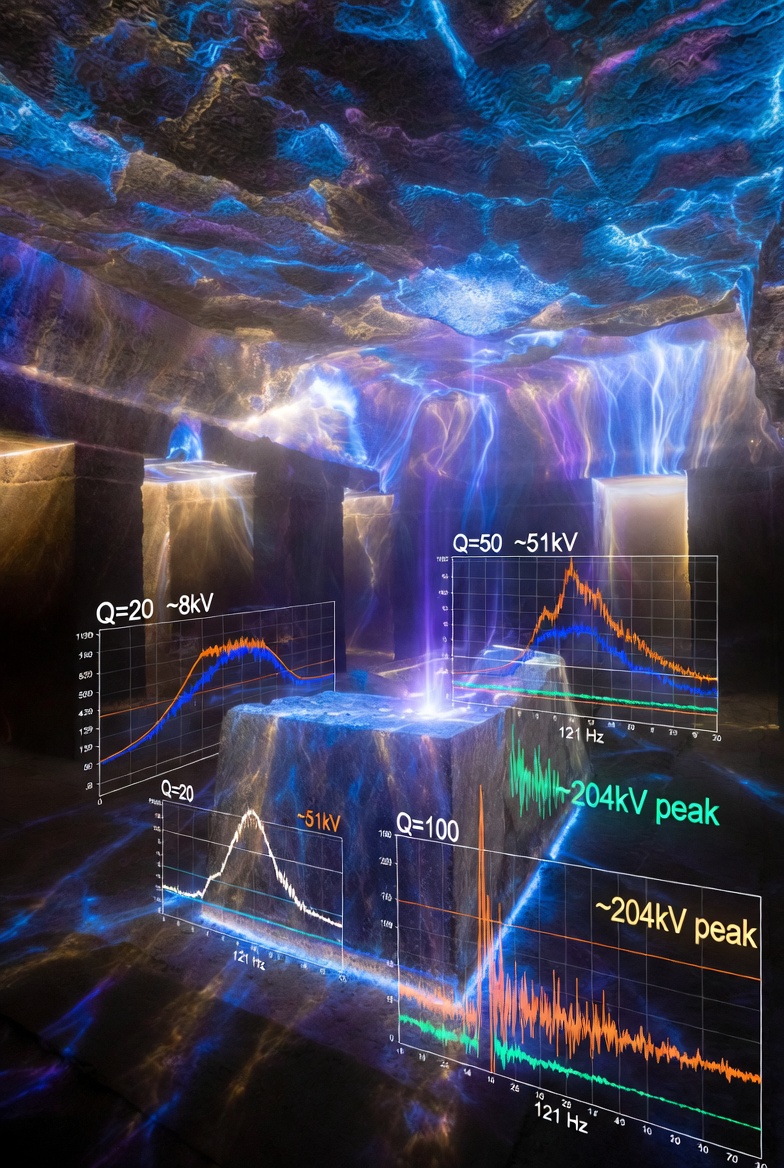
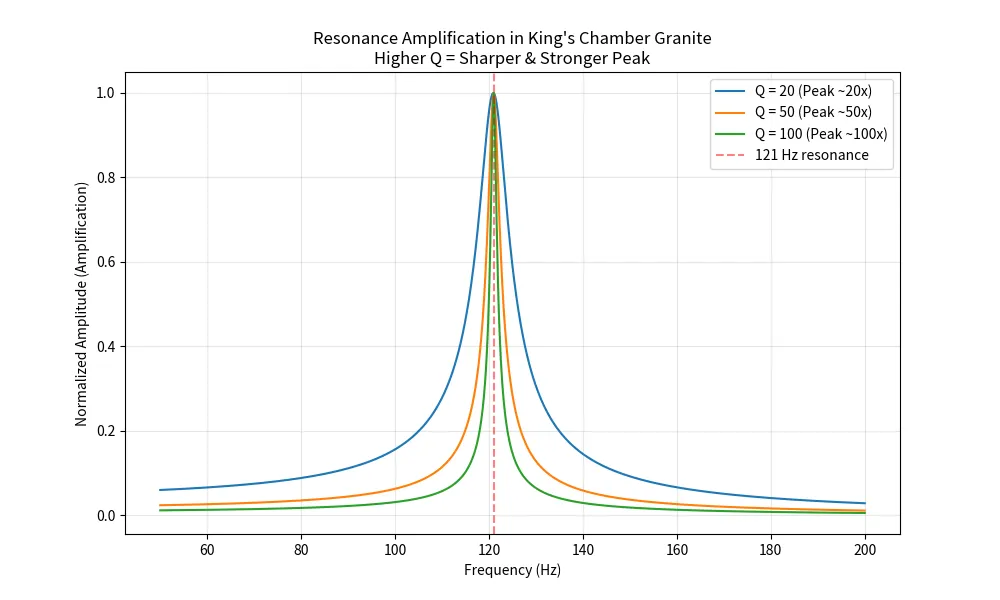
Resonance and Energy Storage Acoustic measurements reveal a fundamental mode near 121 Hz with harmonics at 242 Hz and 363 Hz. Quality factor Q (estimated 50–100+) yields storage time τ = Q/(πf) on the order of seconds to minutes, extendable via subharmonic locking (period-2 at ~60.5 Hz).
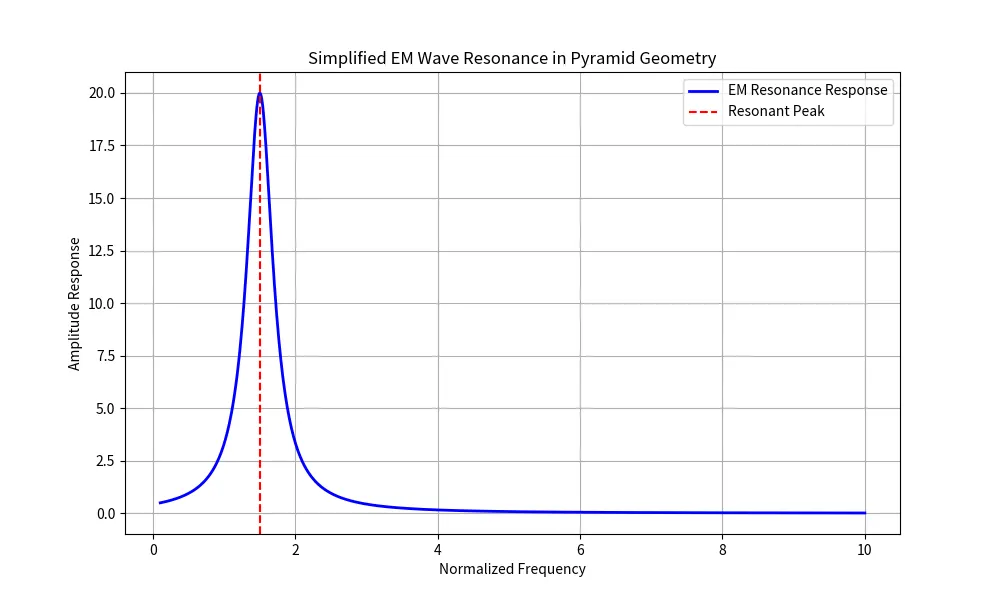
Electromagnetic multipole analysis confirms the structure concentrates radio-frequency energy (200–600 m wavelengths) into the chamber (Balezin et al., 2018). Coupled piezo-EM response allows incoming pulses to drive mechanical vibration, generating and storing electrical potential.
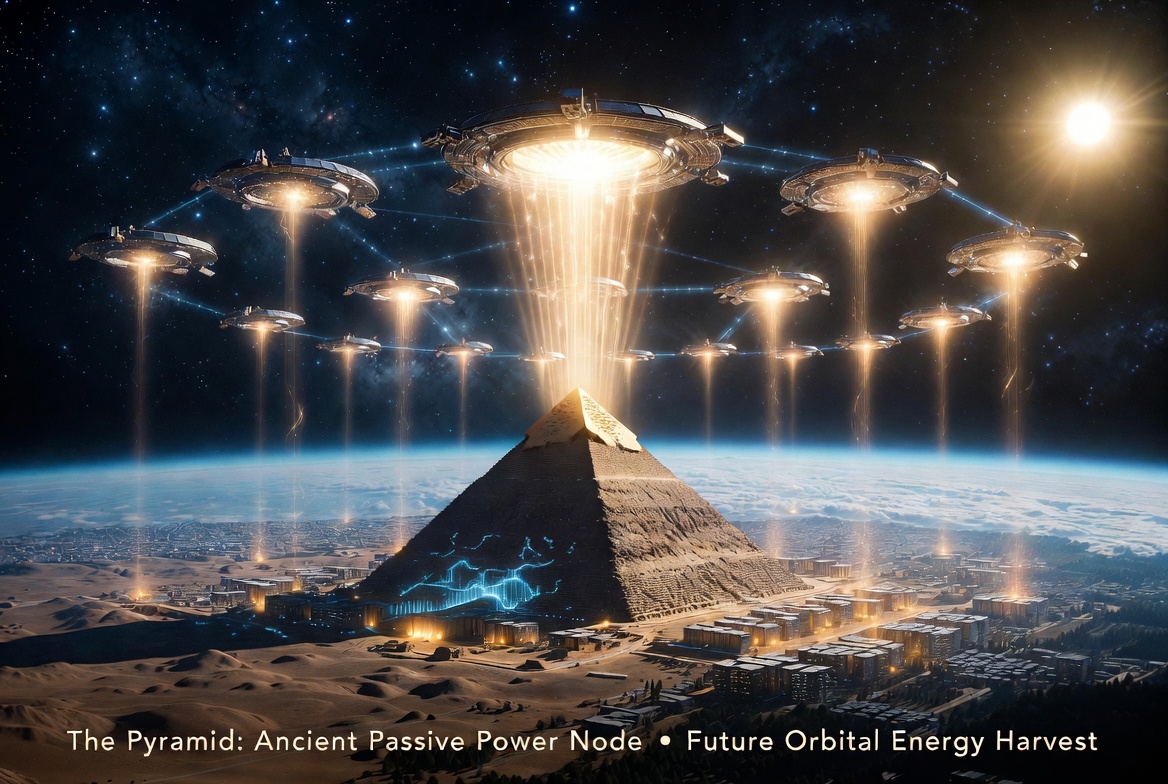
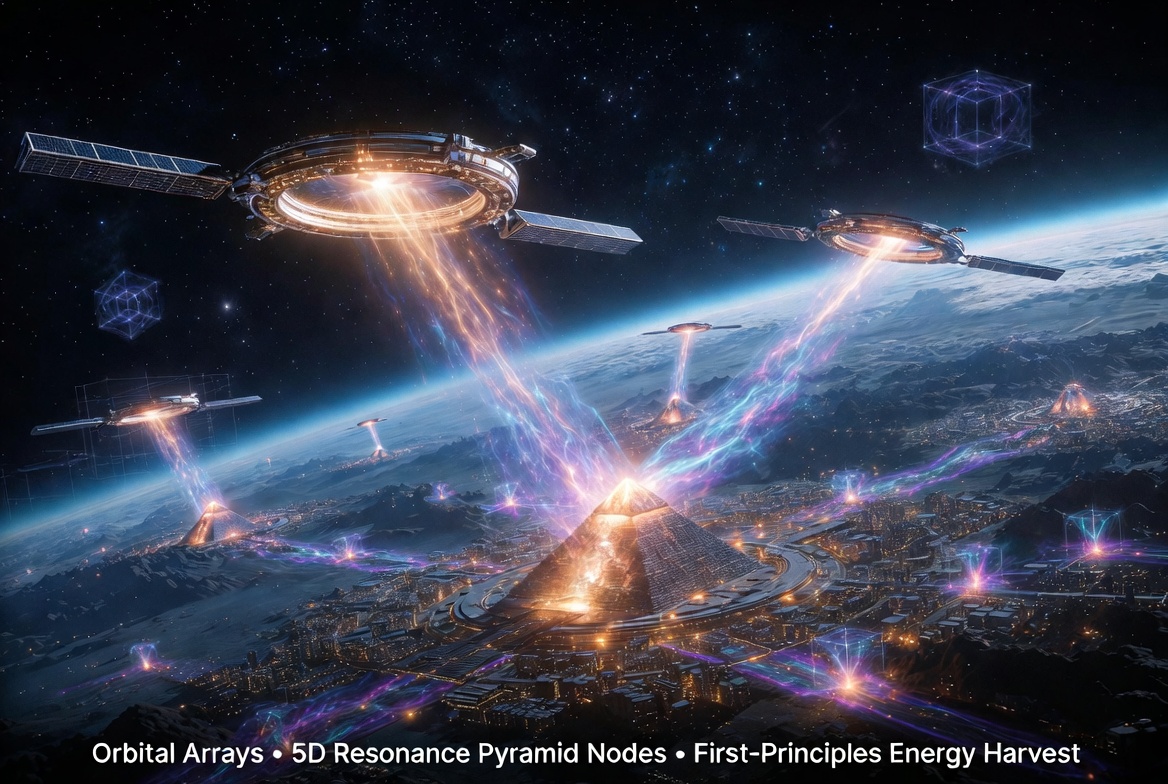
Operational Hypothesis The system operated cyclically: orbiting solar platforms (or high-altitude equivalents) delivered short resonant pulses when aligned overhead at optimal 42° incidence. The copper apex beacon enabled precise locking. The granite node stored energy in high-Q modes and released it via sympathetic resonance to local receivers. The empty coffer likely housed a removable central distributor element, explaining its pristine, lidless state.
Discussion and Modern Implications The Pyramid demonstrates scalable resonant power technology using natural materials. Modern analogs include high-Q cavities, rectennas, and time-crystal research. Retrofitting structures like the Luxor Hotel could provide proof-of-concept orbital-to-ground power transfer, addressing terrestrial energy needs while informing space-based systems (reduced cabling via resonant distribution).
Conclusion The Great Pyramid was a precision resonant power node engineered with remarkable foresight. Its 42° geometry, material layering, and resonant tuning enabled efficient energy capture and distribution. Plan42 proposes reviving this ancient technology through garage-scale models, Luxor retrofits, and orbital fleets. The past offers not mystery, but blueprint.
References (selected)
Balezin et al. (2018). Electromagnetic properties of the Great Pyramid. Journal of Applied Physics.
Vyse, H. (1840). Operations Carried On at the Pyramids of Gizeh.
Acoustic studies: Danley et al. (various field measurements).
Scientific Analysis: The Great Pyramid as a Resonant Power Node
Geometric Foundation
The builders employed the seked ratio of 5.5 (5 palms horizontal per 7 palms vertical). This yields:

This 42° angle matches the primary rainbow minimum deviation angle, where quantum particle rays constructively interfere for maximum intensity. In wave mechanics, such geometry optimizes multipole moments (dipole + quadrupole), enabling strong field concentration (Balezin et al., 2018 multipole modeling).
Material Science & Piezoelectric Core
The King’s Chamber uses Aswan red granite (~25–55% quartz). Quartz exhibits the direct piezoelectric effect:
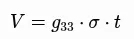
where g33 is the voltage constant, σ is mechanical stress from overburden (~10–50 MPa), and t t t is effective thickness. The ~6.5 million tons of mass above maintains constant compression, while the limestone casing provides dielectric insulation ϵr≈7–9 and reflection.
Resonance & Energy Storage
Acoustic eigenmode: fundamental ~121 Hz (chamber length ~10.45 m). Quality factor Q (estimated 50–100+) gives energy storage time:

At Q=100, τ≈0.26 seconds for the fundamental, extendable via subharmonic locking (period-2 at ~60.5 Hz). Electromagnetic multipole resonance (200–600 m wavelengths) couples to these modes through phonon-photon interaction in quartz, creating a unified piezo-EM transducer.
Operational Model (Ancient Feasibility)
A high-altitude or orbital platform would deliver periodic pulses when aligned overhead. The copper/gilded apex served as conductive beacon and field concentrator. Incoming energy at resonant frequency + 42° incidence focused into the chamber, charged the granite frequency battery, and released via sympathetic resonance. The empty sarcophagus likely housed a removable central distributor (tuned mass or resonator) — explaining its pristine, lidless state when first documented.
Modern Implementation – Using Luxor Example
Using today’s technology, we replicate this with:
Phased-array satellites (Starlink heritage) for precise beaming.
Rectenna arrays + supercapacitors at the receiver.
High-Q resonant cores (quartz composites or metamaterials).
Humorous: The Luxor Retrofit Imagine buying th Luxor Hotel in Las Vegas (a giant black pyramid already on the grid). Swap the casino guts for rectennas and resonant chambers, install a modern copper-style apex beacon, and let orbital sats deliver daily pulses. Result? The Strip gets supplemental clean power, the Luxor becomes the world’s coolest science attraction, and Vegas — famous for excess — ironically gets saved by ancient Egyptian engineering. The comedian in all of us smiles at the thought of a pyramid powering neon lights and fountains.
This shows we can build functional Pyramid-scale nodes today. The distributor? A central tunable resonator (piezo array + supercapacitor bank) that receives, stores, and wirelessly distributes via sympathetic resonance or directed low-power beams to local receivers — no heavy cabling required.
Conclusion The Great Pyramid was a precision resonant power node. Its 42° geometry, material layering, and high-Q design enabled efficient cyclic energy handling using only Bronze-Age tools and observation. Plan42 revives this lost technology for Earth, space, and beyond.

Treat money as a resource you manage rather than own, which reduces greed and anxiety.
LEARN ABOUT OTHER FAMOUS PLACES: Old Town San Diego, Old Towne Orange, Old Town San Clemente, Old Town Monrovia, Old Town Tamecula, Old Town Pasadena, Old Town Sacramento, Old Town Bern, Old Town Stockholm, Old Town Prague, Old Town Lijiang, Old Town Alexandria, Old Town Albuquerque, Old Town Cottonwood, Old Town Quedlinburg, Old Town Rothenburg ob der Tauber, Old Town Marienplatz Munich, Flipside Point, Alexanderplatz Old Town Berlin, Old Town Chicago, Old Town Kissimmee Florida, Phuket Old Town, Old Town Asakusa, Old Town Madrid Major Square, Kraków Old Town, Old Town London Piccadilly Circus,
~ ADVENTURER QUOTE:
“Courage is being scared to death and saddling up anyway!” – John Wayne
Visit Us At:
FLIPSIDE POINT
~ “I don’t know, I’m making this up as I go.” — Indiana Jones ~
19171 Magnolia, Huntington Beach, CA 92646
"Thanks For Being Incredible!"
Great ARTICLES: How The Great Pyramid in Egypt Worked, History of RIIP Brewery, All About GREEK Mediterannean Food, World Cup Information, Best Restaurants of Huntington Beach, History of Huntington Beach Pier, Huntington Dog Beach, Old World Huntington Beach, History of Detroit vs. New York Pizza, History of Riip Pizza, History of the New York Pizza, History of the Detroit Deep Dish,
This website is owned and operated by (c) 2026 - University of San Clemente Inc.