
All about the Detroit vs. New York Pizza!
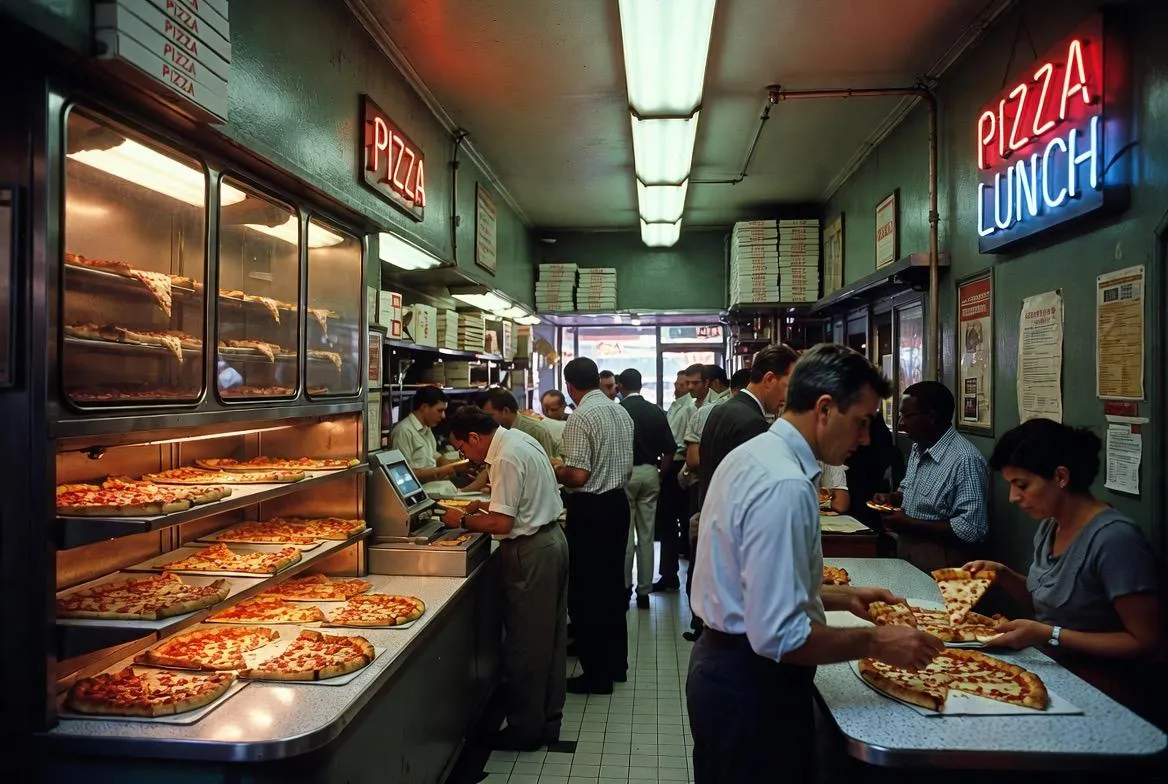
Detroit-style pizza and New York thin-crust pizza are two of America’s most iconic regional pizza styles. They developed in very different eras, environments, and culinary traditions, resulting in almost opposite approaches to crust, shape, toppings, and eating style.
New York Thin-Crust Pizza – Origins and History
New York-style pizza grew out of Neapolitan pizza brought by Italian immigrants to New York City in the late 19th and early 20th centuries.
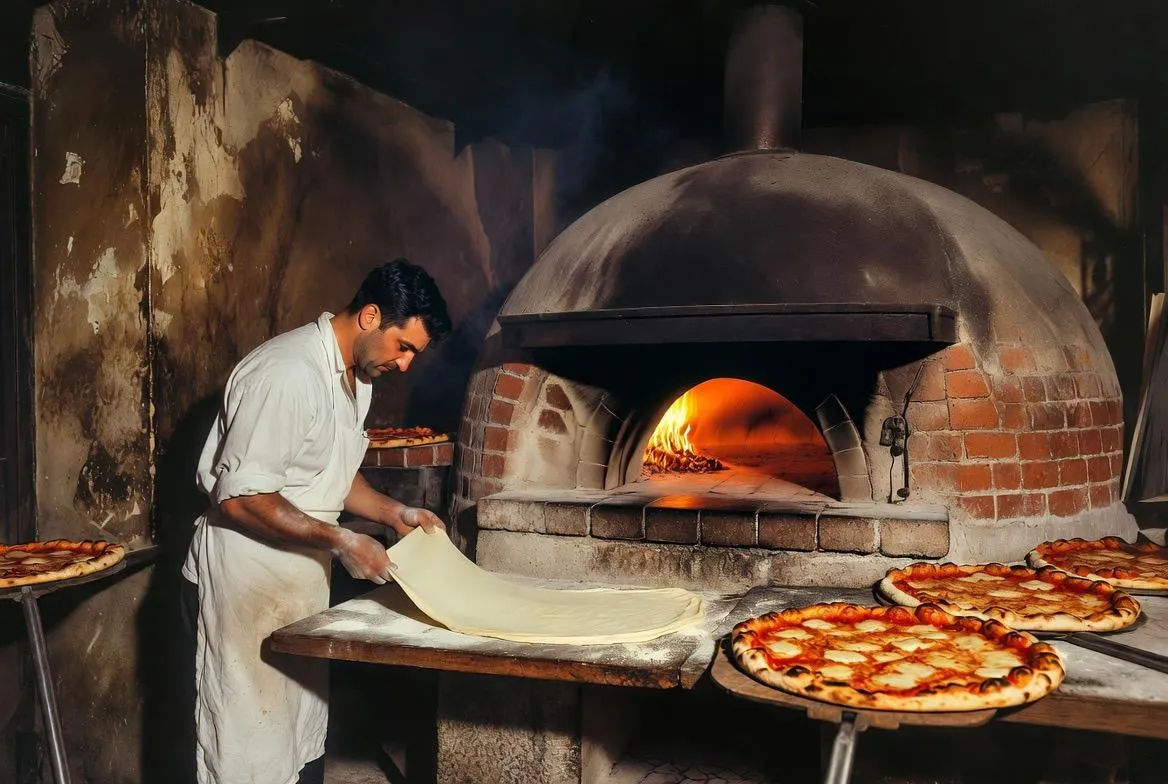
The traditional founding story credits Gennaro Lombardi, a Neapolitan immigrant, with opening Lombardi’s at 53½ Spring Street in Little Italy in 1905 — long marketed as America’s first licensed pizzeria. He (or employees) adapted Neapolitan techniques to American ingredients and larger appetites, baking in coal-fired ovens that reached very high temperatures. The result was a large, thin, hand-tossed pie with a crisp yet foldable crust, simple tomato sauce, and mozzarella. Whole pies were the norm at first; slices became common later as a cheap, portable lunch for workers. 
Recent historical research has complicated the “first pizzeria” claim. Records suggest earlier pizza-making activity in New York (possibly by Filippo Milone and others in the 1890s–early 1900s), and Gennaro Lombardi arrived in the U.S. only in late 1904. Still, Lombardi’s became the most famous early example and the symbolic birthplace of the New York style.
Key developments:
• 1920s: Former Lombardi employee Antonio “Totonno” Pero opens Totonno’s on Coney Island (1924). Other early coal-oven places (Patsy’s, John’s of Bleecker Street) follow.
• Mid-20th century: The “slice culture” explodes after World War II. Gas deck ovens become common, making by-the-slice service faster and more practical. Independent slice shops proliferate across the five boroughs.
• Postwar decades: New York-style becomes the default American pizza — large, foldable slices eaten on the street, thin crust that stays crisp, balanced sauce-to-cheese ratio.
The style emphasizes a thin, sturdy, foldable crust with a slight chew and char, typically cut into wide triangular slices.
Detroit-Style Pizza – Origins and History
Detroit-style pizza was invented much later, in 1946, at Buddy’s Rendezvous (later Buddy’s Pizza) on Detroit’s east side at Six Mile and Conant.
Owner Gus Guerra (with input from his wife Anna or longtime employee Connie Piccinato) wanted to add food to his former speakeasy/bar. Drawing on Sicilian sfincione traditions, they created a thick, airy, focaccia-like dough baked in rectangular/square blue steel pans. These pans were industrial automotive trays (made by Dover Parkersburg in the 1930s–40s) originally used as drip pans or to hold small parts and scrap metal in Detroit’s car factories. The heavy, high-sided steel pans produced a light, crispy crust with distinctive caramelized cheese edges (“frico”) where the cheese melted against the pan walls. 
Toppings were layered in reverse of most styles: cheese (often Wisconsin brick cheese) went down first and was pushed to the edges, followed by pepperoni pressed into the dough, then sauce ladled on top in stripes or “racing stripes” (the “red-top” look).
Key events and spread:
• 1946: First known square Detroit-style pizzas served at Buddy’s.
• 1953: Gus Guerra sells Buddy’s and opens Cloverleaf Bar & Restaurant in Eastpointe, continuing the style. Former Buddy’s pizza maker Louis Tourtois later opens Loui’s Pizza in Hazel Park.
• Local chains (Jet’s, Shield’s, Luigi’s) adopt and refine the style.
• The term “Detroit-style” was rarely used until the 1980s; locals often just called it Sicilian or square pizza.
• 2010s national boom: The style explodes outside Michigan thanks to places like Emmy Squared (New York) and broader media attention. Major chains begin offering versions. National Detroit-Style Pizza Day is established on June 23 (starting 2021).
Detroit-style remains defined by its square shape, thick but airy crust, cheesy caramelized edges, and sauce-on-top presentation.
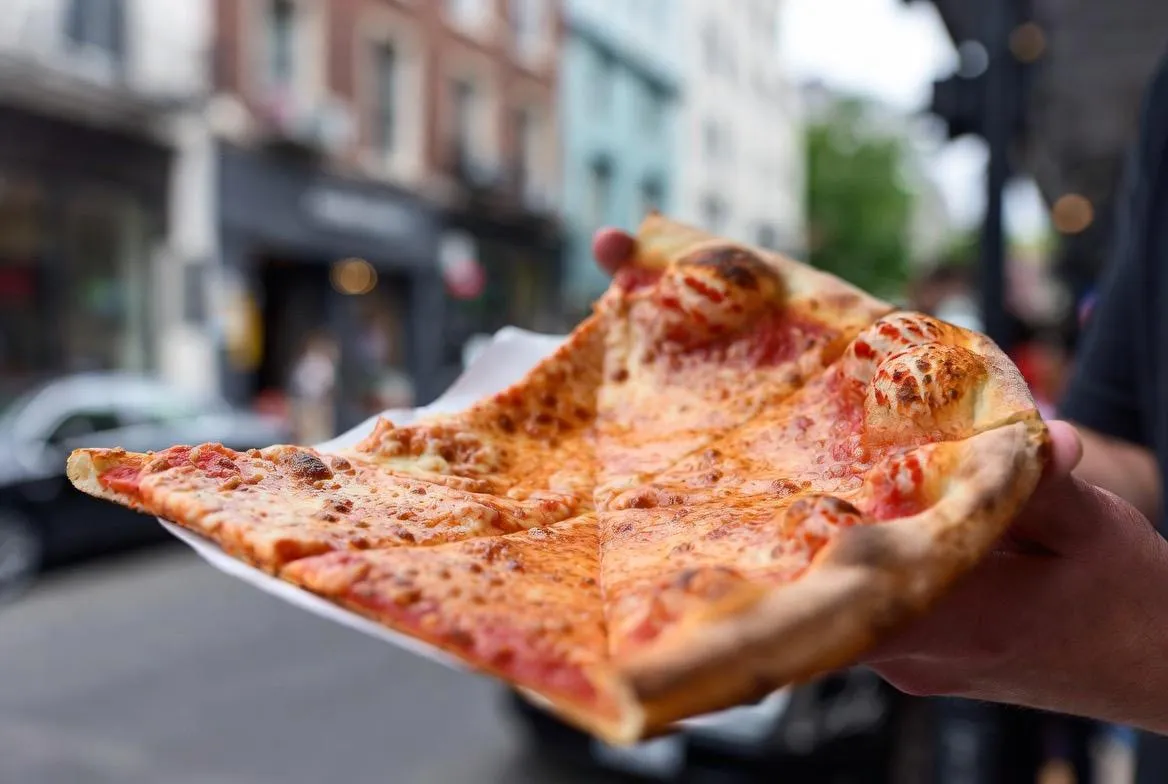
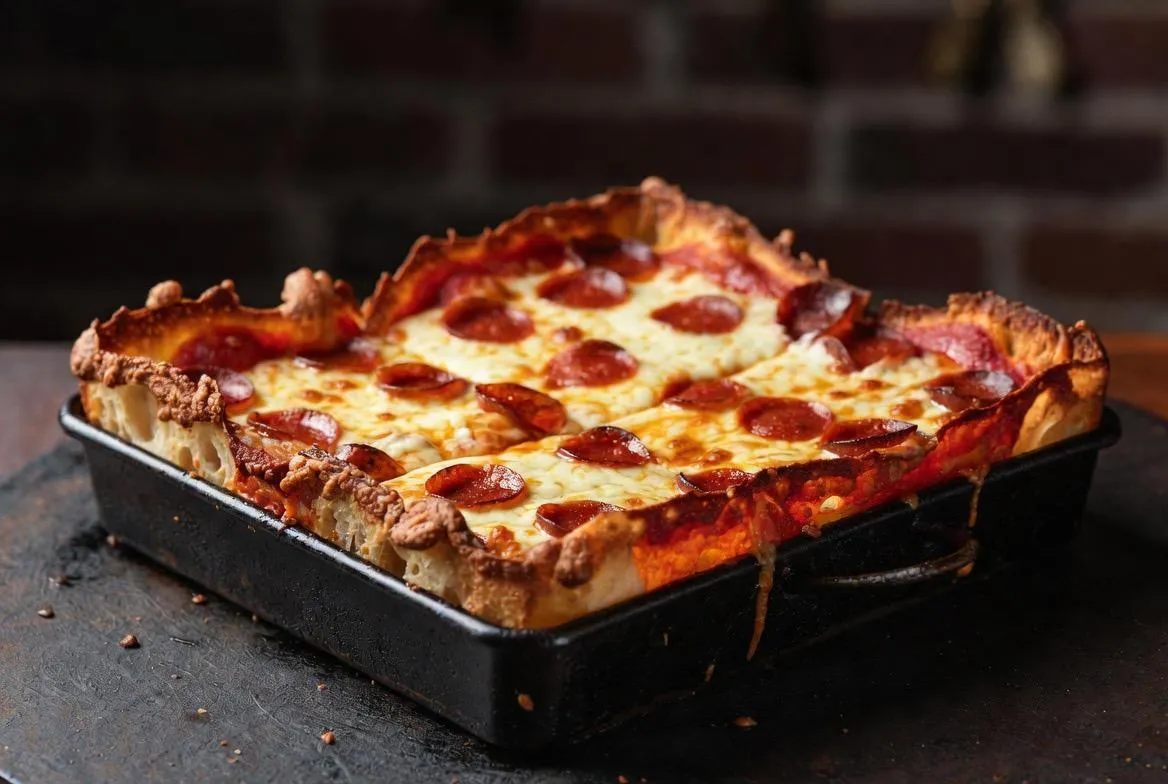
New York pizza is built for speed, portability, and everyday eating. Detroit pizza is a pan-baked, cheese-forward, texturally dramatic pie that rewards the unique industrial pans that created it.
Early New York era (1900s–1920s) – Coal-oven whole pies in Little Italy.
Mid-century New York slice culture (1950s–1960s)
1946 – Birth of Detroit-style at Buddy’s
Classic Detroit-style (1970s–1990s local era)
New York thin-crust pizza became the everyday American standard through early 20th-century immigration and mid-century slice culture. Detroit-style pizza remained a proud regional specialty for decades before its recent national surge, rooted in industrial ingenuity and Sicilian family traditions. Both styles continue to evolve while staying true to their distinctive origins.
Borrowing is viewed as a loss of freedom.
LEARN ABOUT OTHER FAMOUS PLACES: Old Town San Diego, Old Towne Orange, Old Town San Clemente, Old Town Monrovia, Old Town Tamecula, Old Town Pasadena, Old Town Sacramento, Old Town Bern, Old Town Stockholm, Old Town Prague, Old Town Lijiang, Old Town Alexandria, Old Town Albuquerque, Old Town Cottonwood, Old Town Quedlinburg, Old Town Rothenburg ob der Tauber, Old Town Marienplatz Munich, Flipside Point, Alexanderplatz Old Town Berlin, Old Town Chicago, Old Town Kissimmee Florida, Phuket Old Town, Old Town Asakusa, Old Town Madrid Major Square, Kraków Old Town, Old Town London Piccadilly Circus,
~ ADVENTURER QUOTE:
“Courage is being scared to death and saddling up anyway!” – John Wayne
Visit Us At:
FLIPSIDE POINT
~ “I don’t know, I’m making this up as I go.” — Indiana Jones ~
19171 Magnolia, Huntington Beach, CA 92646
"Thanks For Being Incredible!"
Great ARTICLES: How The Great Pyramid in Egypt Worked, History of RIIP Brewery, All About GREEK Mediterannean Food, World Cup Information, Best Restaurants of Huntington Beach, History of Huntington Beach Pier, Huntington Dog Beach, Old World Huntington Beach, History of Detroit vs. New York Pizza, History of Riip Pizza, History of the New York Pizza, History of the Detroit Deep Dish,
This website is owned and operated by (c) 2026 - University of San Clemente Inc.