
FLIPSIDE POINT SHIRT STORE
Great Quality and Value

About General Store and Promotioinal Items
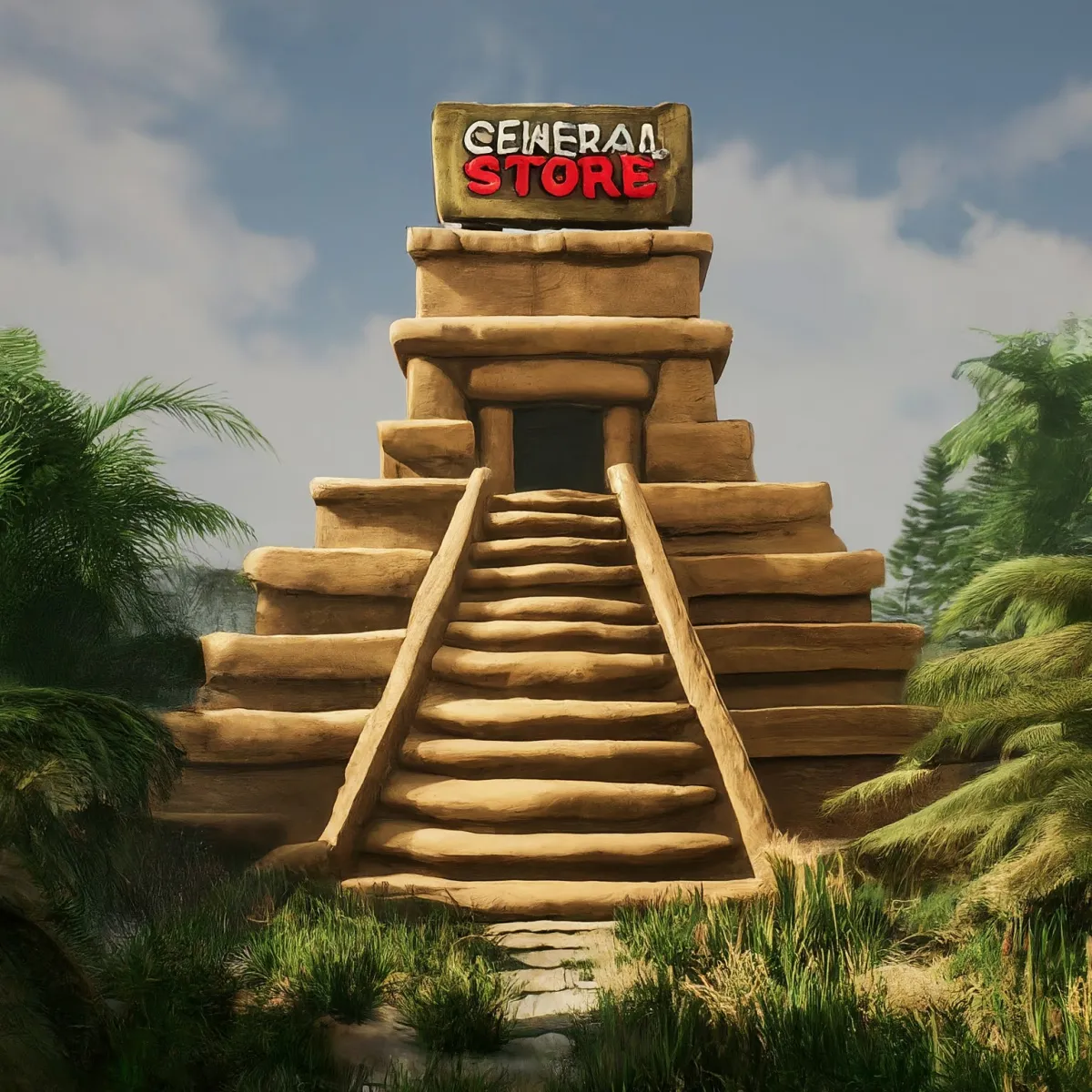
GENERAL STORE in
Flipside Point, Huntington Beach, California.
HISTORY
There are really two different stories behind Flipside Point: the history of the physical shopping center at 19171 Magnolia Street in Huntington Beach, and the newer “Flipside Point” identity, which is being developed around archaeology, exploration, discovery, and the idea of looking at familiar things from another perspective. Flipside Point
The property existed as a neighborhood commercial center well before the Flipside Point identity. Public records show businesses operating at 19171 Magnolia Street for years, and Huntington Beach planning records document restaurant activity there by at least the 2010s. For example, a 2019 city planning case identifies the property as commercially zoned and documents Ouzo & Feta operating in Suites 1 and 2.
Over time, the center developed an unusually varied collection of businesses—restaurants, a brewery/pizzeria, salons, music and dance instruction, pet services, professional services and other neighborhood businesses—with The Home Depot serving as the major retail anchor. Today, Flipside Point describes itself as an “evolving Home Depot anchored shopping center.”
There are also layers of local business history within individual storefronts. For example, the present Riip Beer & Pizzeria location occupies the former Fitzgerald's Irish Pub space; Flipside Point's history material describes Fitzgerald's as a neighborhood establishment that operated for roughly four decades before Riip eventually moved into the location.
The current Flipside Point concept appears to be a new identity being layered onto the existing shopping center, rather than the historical name under which the property was originally developed. The center's current materials repeatedly describe Flipside Point as evolving, which is important when discussing its history: some of what visitors see described online represents the planned direction of the property, rather than something that has existed there historically.
The name works particularly well with that concept. “Flipside” commonly suggests another side or an alternative way of looking at something, while “point” can suggest a place, destination or point of discovery. That makes Flipside Point fit the center's emerging idea of combining an ordinary neighborhood shopping destination with something unexpected on its “other side.”
I haven't found a reliable published source documenting who specifically coined the name or the exact date and reasoning behind its adoption, so I wouldn't present a more detailed origin story for the name as historical fact without records from the property's owners.
Why archaeology is part of Flipside Point
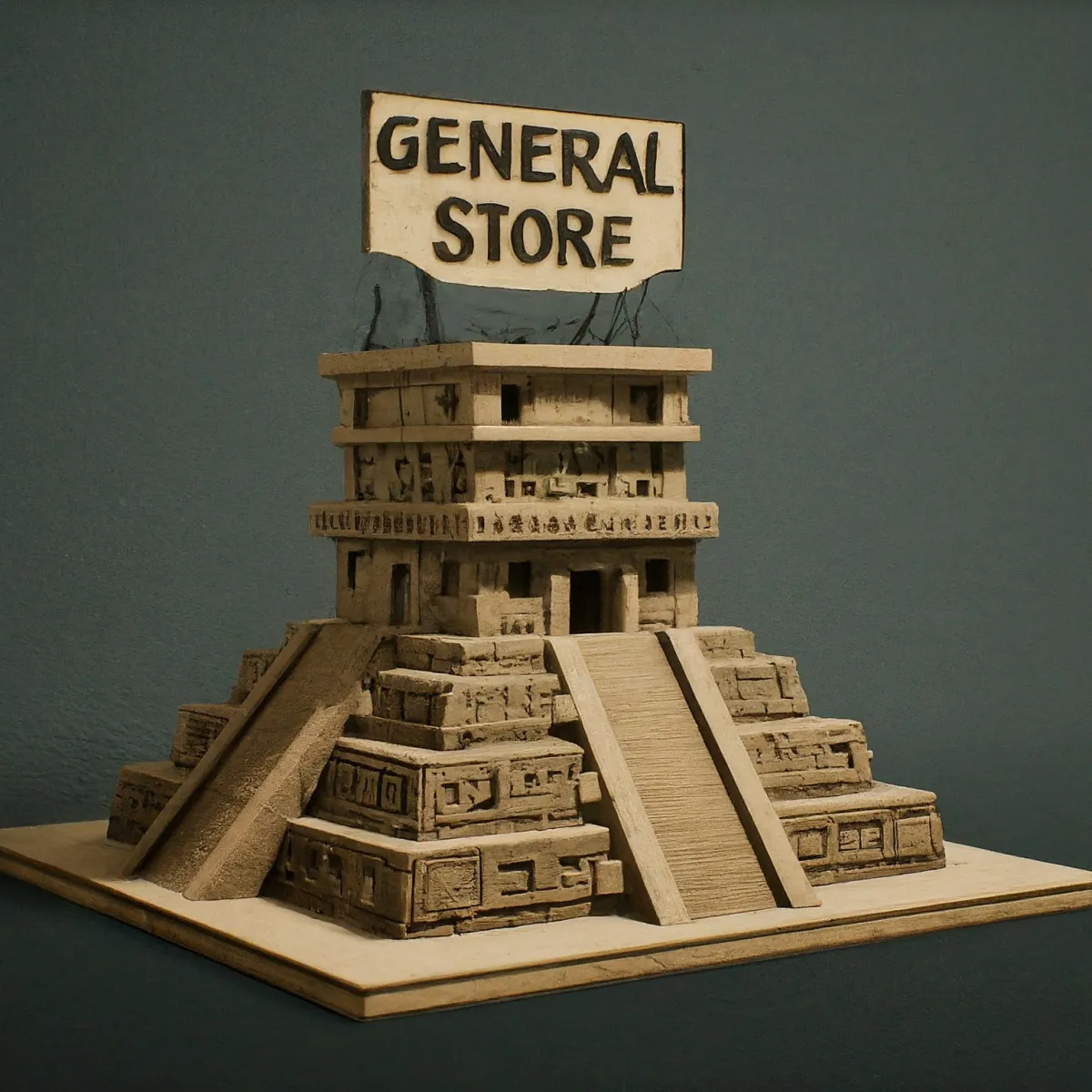
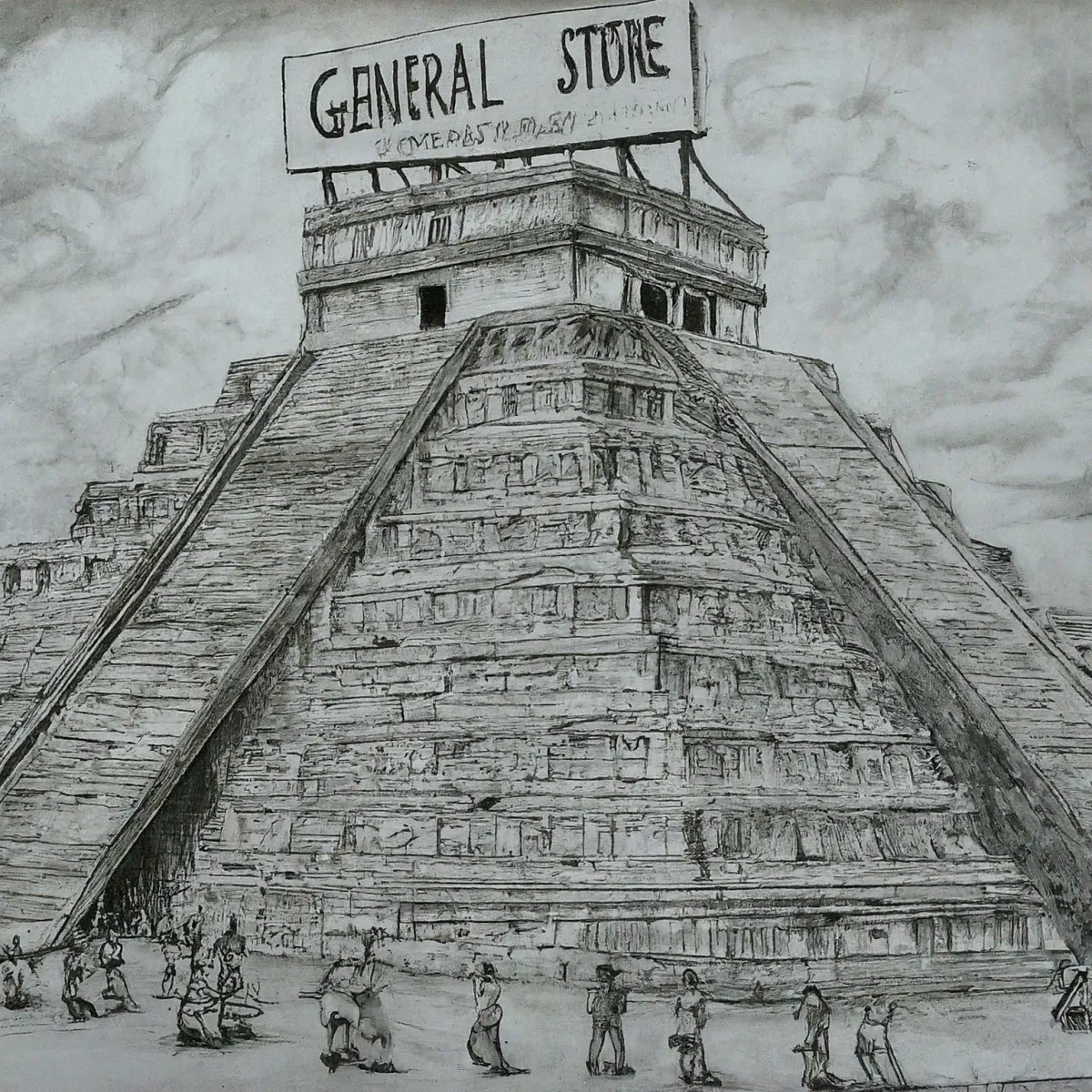
This is where the concept becomes much more unusual. Flipside Point's current website says the center is intended to become an “archaeologist's haven,” combining contemporary shops and restaurants with displays inspired by ancient civilizations, artifacts, discovery, photo opportunities and inspirational messages.
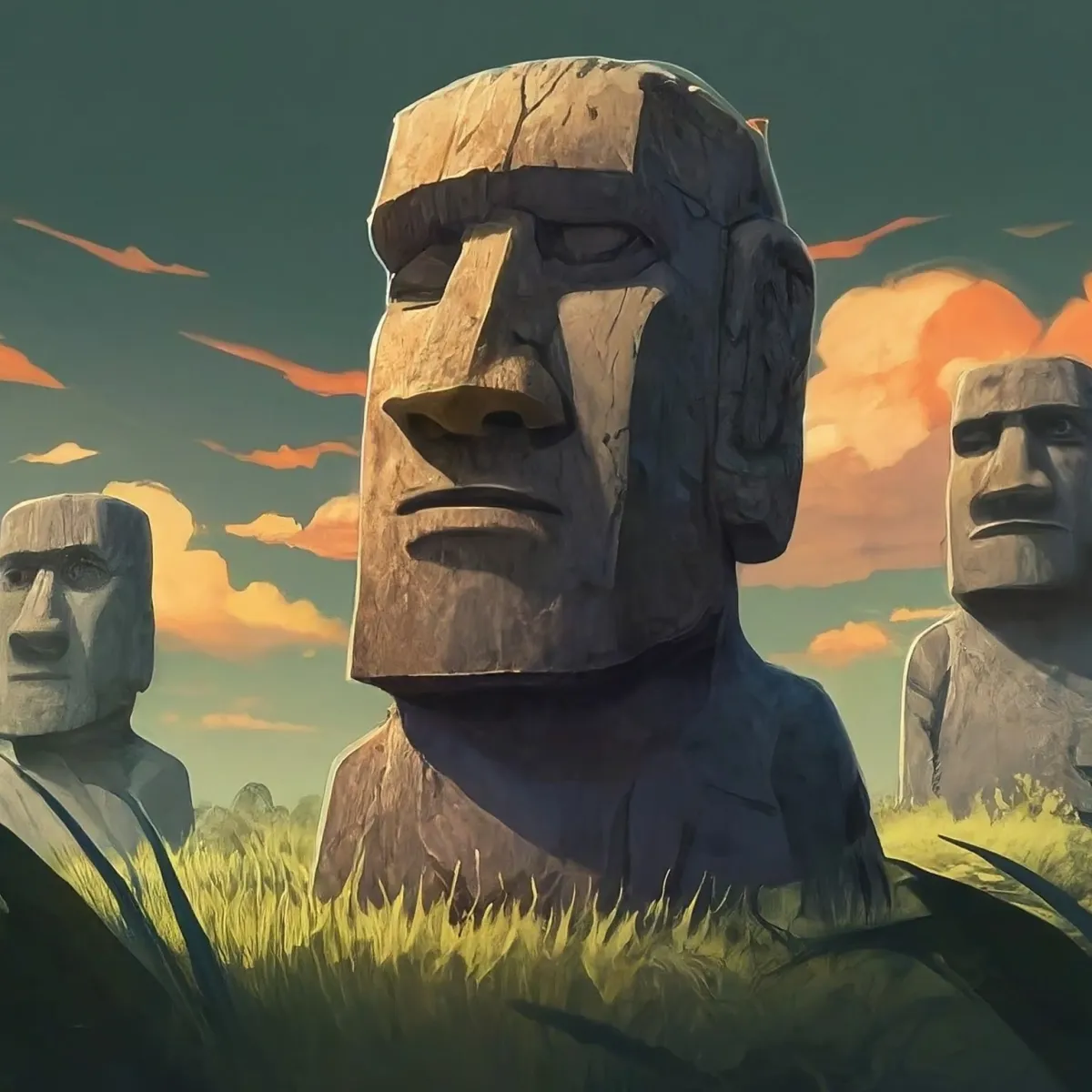
The center has outlined a number of planned discovery-style attractions, including an Ark of the Covenant-inspired feature, an Easter Island head, a Monarch Butterfly area, “Mustachio the Lucky Llama,” and an Archaeologist's Inspiration Quest. Several of these are explicitly marked “coming soon,” so they should be understood as themed attractions or planned installations rather than actual archaeological discoveries made on the property.
That's an important distinction: there is evidence that professional archaeological/cultural-resource research has occurred at this address, but I found no evidence that Flipside Point itself sits on a major archaeological excavation or that ancient artifacts were unearthed there. A California cultural-resources bibliography records a 2007 Cultural Resources Records Search and Site Visit for 19171 Magnolia Street and lists zero resources for that particular study.
So the archaeology at Flipside Point is best understood as a creative theme centered on exploration and discovery, rather than the center having been created because of an archaeological find.
T-shirt (also spelled tee shirt, or teefor short) is a style of fabric shirt named after the T shape of its body and sleeves. Traditionally, it has short sleeves and a round neckline, known as a crew neck which lacks a collar. T-shirts are generally made of stretchy, light, and inexpensive fabric and are easy to clean. The T-shirt evolved from undergarments used in the 19th century and, in the mid-20th century, transitioned from undergarments to general-use casual clothing. They are typically made of cotton textile in a stockinette or jersey knit which has a distinctively pliable texture compared to shirts made of woven cloth. Some modern versions have a body made from a continuously knitted tube, produced on a circular knitting machine such that the torso has no side seams. The manufacture of T-shirts has become highly automated and may include cutting fabric with a laser or a water jet T-shirts are inexpensive to produce and are often part of fast fashion, leading to outsized sales of T-shirts compared to other attire.For example, two billion T-shirts are sold worldwide per year, and the average person in Sweden buys nine T-shirts a year. Production processes vary but can be environmentally intensive and include the environmental impact caused by their materials, such as cotton, which uses a lot of water and pesticides.
Infant clothing or baby clothing is clothing made for infants Baby fashion is a social-cultural consumerist practice that encodes in children's fashion the representation of many social features and depicts a system characterized by differences in social class, richness, gender, or ethnicity.
Don’t leave Flipside Point empty-handed! Stop by and pick up a souvenir to remember your adventure, celebrate your discoveries, and take a little piece of Flipside Point home with you. Find your favorite and make it part of your Flipside story!
The history of Huntington Beach developed from coastal wetlands and ranch lands into one of Southern California’s best-known beach communities. The area was once part of Rancho Las Bolsas and later became an agricultural region. In 1901, developers established a seaside community called Pacific City, envisioned as a West Coast resort destination. The town was later renamed Huntington Beach in connection with businessman and railroad developer Henry E. Huntington, whose Pacific Electric Railway reached the community in 1904. Huntington Beach officially incorporated in 1909.
The discovery of oil around 1920 dramatically transformed the city, bringing oil derricks, workers, businesses, and rapid population growth. During the following decades, Huntington Beach expanded into a suburban coastal city while maintaining its connection to the beach.
Surfing also became an important part of the city's identity. Hawaiian-born surfer George Freeth gave surfing demonstrations there as early as 1910, helping introduce the sport locally. Huntington Beach eventually became internationally associated with surfing, beaches, its historic pier, and Southern California coastal culture.
The history of Huntington Beach stretches from early ranch lands and agriculture to the development of a seaside community known as Pacific City. The town was later renamed Huntington Beach in connection with railroad developer Henry E. Huntington and officially incorporated in 1909. The discovery of oil in the 1920s brought rapid growth, while the city’s beaches and surf culture eventually helped establish its famous identity as Surf City USA.
Today, Flipside Point is part of the continuing story of Huntington Beach. Through its local businesses, gathering spaces, history, and spirit of discovery, Flipside Point celebrates the community’s past while creating a new destination for the next generation. Explore the history, discover something unexpected, and experience another side of Huntington Beach at Flipside Point.
Smile, It's Infectious shirts "Smile, It's Infectious" shirts are a delightful and positive expression of the power of a simple smile. These shirts typically feature a cheerful and uplifting message that encourages people to share the contagious joy of a smile. The idea behind such shirts is to spread positivity, promote a friendly atmosphere, and remind individuals of the infectious nature of a genuine and warm smile. The design often incorporates vibrant colors, playful fonts, or happy emoticons to visually reinforce the positive message. Beyond being a fashion statement, these shirts serve as a reminder of the small yet impactful gestures that can brighten someone's day and create a ripple effect of happiness. Whether worn casually or intentionally, "Smile, It's Infectious" shirts convey a universal and timeless message that transcends language barriers and cultural differences, connecting people through the shared experience of joy and kindness.are a delightful and positive expression of the power of a simple smile. These shirts typically feature a cheerful and uplifting message that encourages people to share the contagious joy of a smile. The idea behind such shirts is to spread positivity, promote a friendly atmosphere, and remind individuals of the infectious nature of a genuine and warm smile. The design often incorporates vibrant colors, playful fonts, or happy emoticons to visually reinforce the positive message. Beyond being a fashion statement, these shirts serve as a reminder of the small yet impactful gestures that can brighten someone's day and create a ripple effect of happiness. Whether worn casually or intentionally, "Smile, It's Infectious" shirts convey a universal and timeless message that transcends language barriers and cultural differences, connecting people through the shared experience of joy and kindness.
Cups is an open-top container used to hold liquids for pouring or drinking. Although mainly used for drinking, it also can be used to store solids for pouring (e.g., sugar, flour, grains, salt).[1][2] Cups may be made of glass, metal, china,[3] clay, wood, stone, bone, polystyrene, plastic, aluminium or other materials, and are usually fixed with stem, handles, or other adornments. Cups are used for quenching thirst across a wide range of cultures and social classes,[4] and different styles of cups may be used for different liquids or in different situations.[5] Cups of different styles may be used for different types of liquids or other foodstuffs (e.g. teacups and measuring cups), in different situations (e.g. at water stations or in ceremonies and rituals), or for decoration.[5][6]
A hoodie (in some cases spelled hoody[1] and alternatively known as a hooded garment)[2] is a type of sweatshirt[1] with a hood that partially or fully covers the wearer's head or face. Hoodies with zippers usually include two pockets on the lower front, one on either side of the zipper, while "pullover" hoodies (without zippers) often include a single large muff or pocket in the same location. Both styles (usually) include a drawstring to adjust the hood opening. When worn up, the hood covers most of the head and neck and sometimes the face. Hoodies may be worn for aesthetic purposes, or protection against the environment (cold weather, rain, wind etc.).
Frequently Asked Questions
The asking hat is better than the not knowing hat!
Is there additional parking?
Yes, we have parking in the lot behind the building.
Are there specific T-shirts that are particularly popular among customers?
Our most popular T-shirt we sell is the classic Flipside Point logo T-shirt. It comes in a variety of colors.
Will there be T-shirts related to specific seasons or events?
Yes there will !
A TacoDilla is a secret menu item that is very popular. It is the T-Rex of tacos. Think of it like very spicy tacos gotten eaten by a quesadilla. Crazy good!
Do you carry other items in your general store?
YES, we carry T-shirts, infant clothing, hats and cups.
Is this general store only online or at Flipside Point?
Yes, it is only online.
Yes we have two 10Min signed locations next to horse barn in the middle of the center. Stores sometimes have their own spaces they label during times of massive deliveries or pickups.
Can other people get a virtual store in Flipside?
Yes!
The most popular Drink hand down is Jamaica. The Jamaica is a Hibiscus tea is a herbal tea made as an infusion from crimson or deep magenta-colored calyces (sepals) of the roselle (Hibiscus sabdariffa) flower. It is consumed both hot and cold. It has a tart, cranberry-like flavor.
Do not be anxious about anything, but in every situation... present your requests to God. And the peace of God... will guard your hearts
LEARN ABOUT OTHER FAMOUS PLACES: Old Town San Diego, Old Towne Orange, Old Town San Clemente, Old Town Monrovia, Old Town Tamecula, Old Town Pasadena, Old Town Sacramento, Old Town Bern, Old Town Stockholm, Old Town Prague, Old Town Lijiang, Old Town Alexandria, Old Town Albuquerque, Old Town Cottonwood, Old Town Quedlinburg, Old Town Rothenburg ob der Tauber, Old Town Marienplatz Munich, Flipside Point, Alexanderplatz Old Town Berlin, Old Town Chicago, Old Town Kissimmee Florida, Phuket Old Town, Old Town Asakusa, Old Town Madrid Major Square, Kraków Old Town, Old Town London Piccadilly Circus,
~ ADVENTURER QUOTE:
“Courage is being scared to death and saddling up anyway!” – John Wayne
Visit Us At:
FLIPSIDE POINT
~ “I don’t know, I’m making this up as I go.” — Indiana Jones ~
19171 Magnolia, Huntington Beach, CA 92646
"Thanks For Being Incredible!"
Great ARTICLES: How The Great Pyramid in Egypt Worked, History of RIIP Brewery, All About GREEK Mediterannean Food, World Cup Information, Best Restaurants of Huntington Beach, History of Huntington Beach Pier, Huntington Dog Beach, Old World Huntington Beach, History of Detroit vs. New York Pizza, History of Riip Pizza, History of the New York Pizza, History of the Detroit Deep Dish,
This website is owned and operated by (c) 2026 - University of San Clemente Inc.