
All about the historic Old World Village!
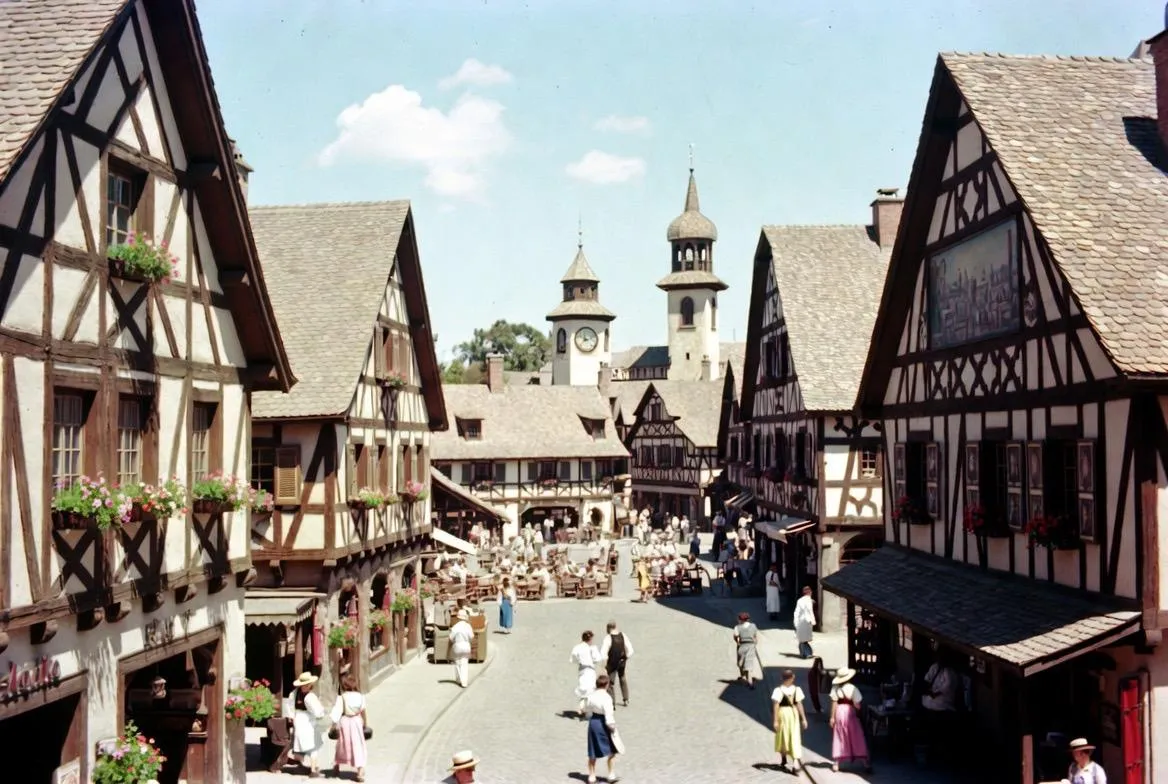
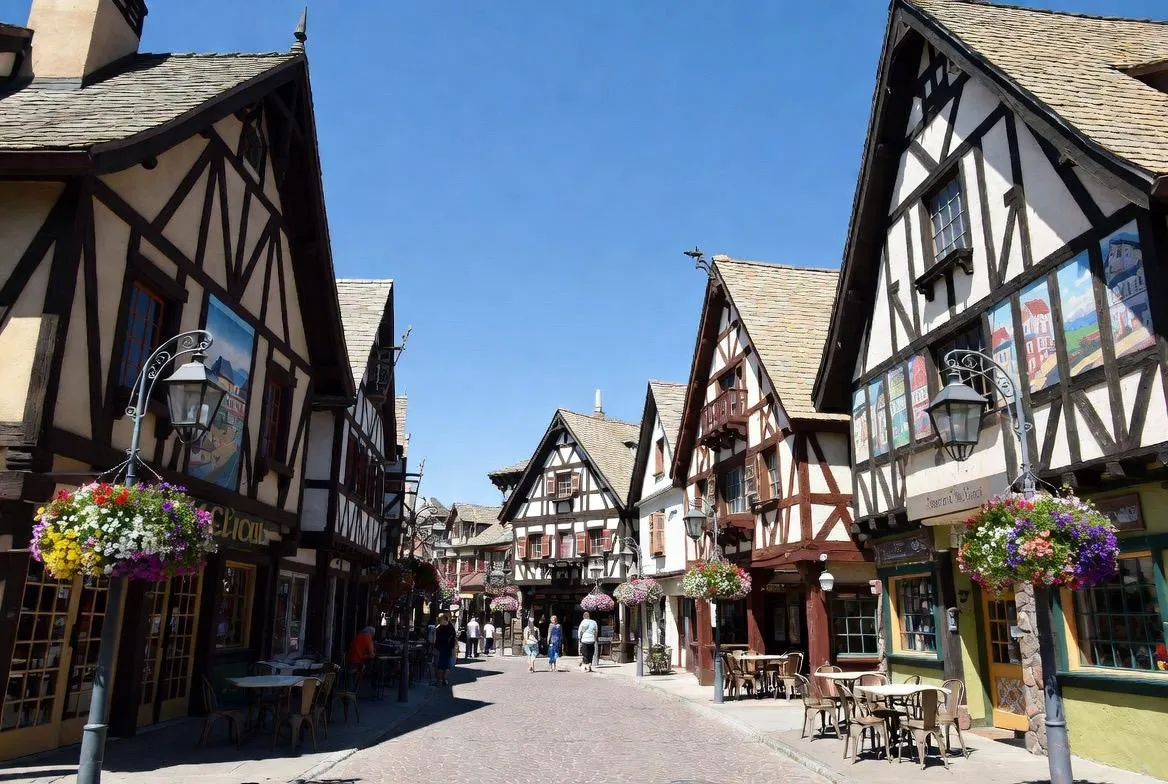
Old World Village (often called Old World Huntington Beach or simply Old World) is a unique European-style enclave in Huntington Beach, California, located at 7561 Center Avenue (nestled between the 405 Freeway and Golden West College). It is a self-contained “live-work” Bavarian village featuring cobblestone streets, half-timbered and stucco buildings, hand-painted murals, shops, restaurants, a church, a hotel, a biergarten, and residences above many of the businesses. About 40 families live there today. 
It is one of Orange County’s most distinctive cultural and commercial landmarks — a deliberate recreation of a traditional European (especially Bavarian) village dropped into suburban Southern California.
How It Came to Be
The story begins with Josef Bischof, born on Christmas Day 1929 in the Bavarian village of Gaukönigshofen, Germany, to a farming family. After World War II, economic hardship dashed his dream of becoming a high-end tailor. He emigrated to the United States in 1952, initially planning to stay only two years. He met Dolores MacGee (an American-born woman of German heritage) at a German center in Hollywood; they married in 1955. Josef worked as a tailor at the famous designer studio Irene’s while beginning to buy, renovate, and flip houses. 
He was inspired by Ports O’ Call Village in San Pedro (a New England-style seaside complex). Wanting to honor his German roots, he and partners created Alpine Village in Torrance, which opened in 1964/1965 as a Bavarian-themed shopping center. After several years there, Josef desired something more authentic: a true live-work village where shop owners could live above their businesses, just as in traditional European hamlets. He split from his Alpine Village partners and purchased approximately 8–9 acres of tomato farmland in Huntington Beach for around $500,000. 
Josef and Dolores designed Old World Village to resemble Oberammergau, the picturesque Bavarian Alpine town famous for its Passion Play (performed every decade since 1634, after villagers vowed to stage it if spared from the bubonic plague).
Construction included:
• About 50–53 live-work units (shops/residences)
• Cobblestone streets
• Imported European lanterns
• Roughly 70 vibrant hand-painted murals (by German artist Monty Baum) depicting scenes from 18 European countries
• A church, social hall, garden gazebo, restaurant/biergarten, market, hotel, and a colorful maypole
The complex officially opened in 1978 (with the first annual Oktoberfest that September; some accounts note earlier Oktoberfest activity around 1975–1976). It was one of only a handful of residential-commercial centers of its kind in the United States at the time. 
Important Events and Evolution
• 1978 onward: Annual Oktoberfest became the village’s signature event — one of Southern California’s longest-running and most authentic, featuring oom-pah bands from Germany/Austria, beer, pretzels, the Chicken Dance, and traditional fare. It continues today (reaching its 47th year around 2025).
• Other long-running traditions: Dachshund/Wiener Dog races, Maifest/Kinderfest, Plum Fest (started 1995 as a tribute to Dolores and her mother Elly for their plum cake tradition), Irish Fest, Greek/Scottish/South American festivals, car shows, art exhibits, nativity plays, weddings, and quinceañeras.
• 1980s: Internal conflicts. Merchants accused Josef of a “reign of terror” over management and control; a lawsuit led to a judgment (later reduced to $1.25 million). Josef later called selling off the individual units to pay construction debt “the biggest mistake” of his life, as it fragmented unified vision under the homeowners association. 
• 1989: A banquet facility was rented for a conference of the Institute for Historical Review (a Holocaust-denial group). The Bischof family stated they did not participate or endorse it and simply rented the space as they did for many events.
• The village occasionally attracted unwanted attention (including skinhead presence in later decades), but it has also been used as a filming location doubling for European settings and was parodied in the TV series Arrested Development as the fictional English enclave “Wee Britain.”
• 2010: Dolores Bischof (“First Lady of Old World Village”) passed away.
• 2025: Josef Bischof died at age 95. His children (including Bernie and Cyndie Kasko) continue involvement, especially with the restaurant and biergarten. 
Over time the proprietors shifted from primarily German and Austrian to a more ethnically diverse group, while the European architectural character and festival calendar remained core to its identity. Ownership of the units is private, with HOA governance; the Bischof family retained some commercial and residential properties.
Legacy
Old World Village has endured for nearly five decades as a living piece of European cultural preservation amid Orange County’s rapid suburban growth. It offers an immersive escape with authentic food, music, architecture, and community events, while the unusual live-work model continues to set it apart. It remains a popular destination for festivals, shopping, dining, and special occasions.
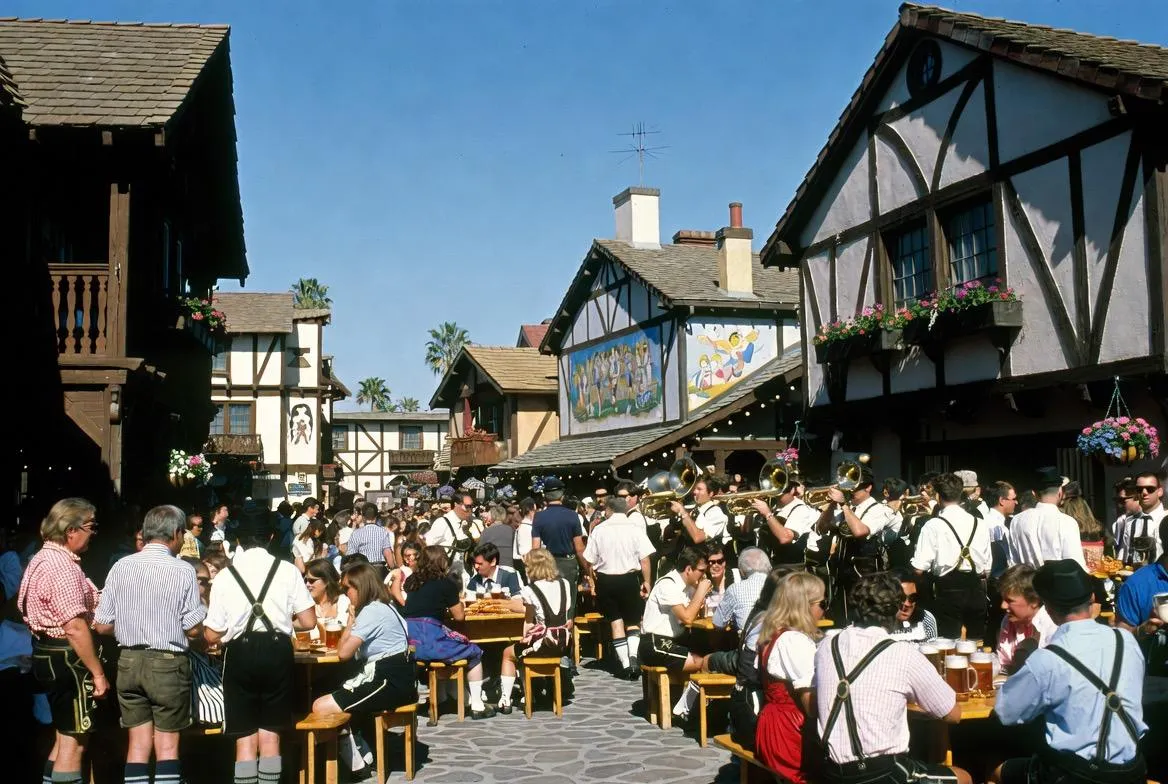
Late 1970s — Opening era, freshly built on former tomato fields.
1980s–1990s — Peak festival energy and growing tradition.
Today — The enduring village, still hosting festivals and daily life.
Old World Village remains a living testament to Josef and Dolores Bischof’s vision of bringing a piece of Bavaria to Surf City.
Borrowing is viewed as a loss of freedom.
LEARN ABOUT OTHER FAMOUS PLACES: Old Town San Diego, Old Towne Orange, Old Town San Clemente, Old Town Monrovia, Old Town Tamecula, Old Town Pasadena, Old Town Sacramento, Old Town Bern, Old Town Stockholm, Old Town Prague, Old Town Lijiang, Old Town Alexandria, Old Town Albuquerque, Old Town Cottonwood, Old Town Quedlinburg, Old Town Rothenburg ob der Tauber, Old Town Marienplatz Munich, Flipside Point, Alexanderplatz Old Town Berlin, Old Town Chicago, Old Town Kissimmee Florida, Phuket Old Town, Old Town Asakusa, Old Town Madrid Major Square, Kraków Old Town, Old Town London Piccadilly Circus,
~ ADVENTURER QUOTE:
“Courage is being scared to death and saddling up anyway!” – John Wayne
Visit Us At:
FLIPSIDE POINT
~ “I don’t know, I’m making this up as I go.” — Indiana Jones ~
19171 Magnolia, Huntington Beach, CA 92646
"Thanks For Being Incredible!"
Great ARTICLES: How The Great Pyramid in Egypt Worked, History of RIIP Brewery, All About GREEK Mediterannean Food, World Cup Information, Best Restaurants of Huntington Beach, History of Huntington Beach Pier, Huntington Dog Beach, Old World Huntington Beach, History of Detroit vs. New York Pizza, History of Riip Pizza, History of the New York Pizza, History of the Detroit Deep Dish,
This website is owned and operated by (c) 2026 - University of San Clemente Inc.